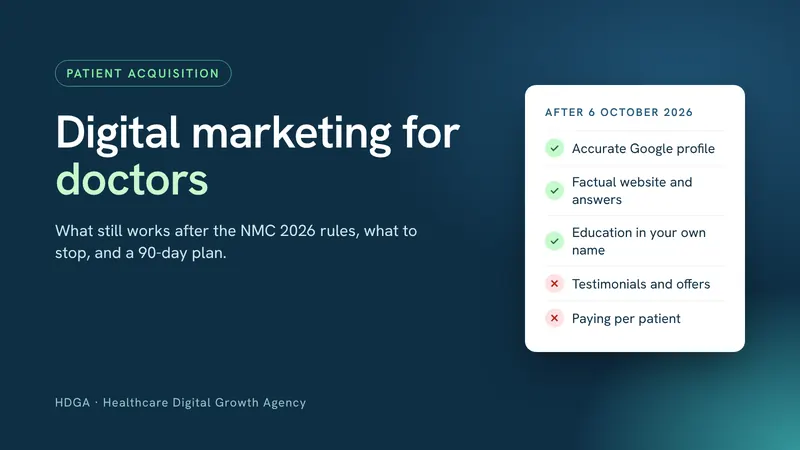
On 6 October 2026, the National Medical Commission's advertising guidelines changed what doctors in India can do online, with immediate effect. Testimonials, before-and-after photos, offers, superlatives and paid rankings are out. Many doctors have concluded that digital marketing itself is now off limits. It is not. What has changed is what works.
This guide explains digital marketing for doctors under the new rules: what still works, what to stop, how the rules differ for individual doctors and for hospitals and clinic chains, and a 90-day plan. For the rules themselves, read our NMC advertising guidelines 2026 explainer.
This article is based on reported summaries of the NMC notice and is not legal advice. Check the official notice, and take legal advice before running any paid promotion.
The short version: inform, don't promote
The guidelines draw one line through everything: factual information and education are allowed; self-promotion and soliciting patients are not. Digital marketing that helps patients find accurate information about you, and understand their condition, still works. Marketing that tries to persuade them you are the best choice does not, and now carries real risk.
Still works:
- an accurate Google Business Profile and directory listings
- a clear website with doctor profiles, treatment information and fees stated factually
- health education content in your own name
- answering patients' questions so search engines and AI tools quote you
- reminders and health information for existing patients who have opted in
Stop now:
- testimonials, patient stories and promotional before-and-after images
- "best", "No. 1", success rates and patient counts
- discounts, offers, contests and free camps used to draw patients
- buying reviews, followers or rankings
- agency deals paid per lead or per patient
Individual doctors and hospitals are treated differently
Individual doctors
The guidelines prohibit doctors from soliciting patients directly or indirectly, or using a third party to market their services. In practice:
- Paid ads promoting your own practice are very hard to square with the rules. Take legal advice before running any, including boosted posts.
- Agencies and freelancers should only help with what you could do yourself: education content, an accurate website and correct listings. You remain responsible for everything published in your name.
- Your disclosures (name, qualifications, registration number and council) must appear on every electronic post. See our practical guide to NMC social media rules.
Hospitals and clinic chains
Hospitals and clinics fall under the Clinical Establishments Act or state law, and the guidelines give them more room for facts: departments, facilities, accreditation, timings, fees and a directory of doctors. Factual paid search ads (for example, "Cardiology OPD in Andheri, open Monday to Saturday") are not expressly banned, provided they make no comparative claims, guarantees or inducements. Check your state's law, and make sure landing pages follow the same rules as the ads.
What still works, in detail
1. Google Business Profile
For local searches, your profile does more than your website. Keep the name, category, address, timings, phone number and fees accurate, add real photos of the premises (with no identifiable patients), and reply to reviews calmly without confirming anyone was a patient. See Google Business Profile management.
2. Your website as a source of facts
A website that informs rather than sells is one of the safest and most effective channels you have. Every doctor needs a profile page with qualifications and registration details. Every main treatment needs its own page with what it is, who it suits, recovery, risks and a realistic cost range. Remove testimonial sliders, success-rate counters and "best doctor" claims. Our SEO guide for doctors covers the structure.
3. Answers patients can find
Patients ask Google and AI assistants questions before they choose a doctor. Clear, doctor-reviewed answers win featured snippets and get quoted in AI answers, without any promotion. See our guides to answer engine optimization and generative engine optimization.
4. Education content in your own name
Short videos and posts explaining conditions, correcting myths or preparing patients for procedures remain allowed, as long as they do not promote your practice or ask people to book. Two platforms done well beat five done badly.
5. Directory listings
Practo, Justdial and hospital doctor directories are treated as patient information when they show facts: name, qualifications, registration, specialty and availability. Platforms may no longer sell higher rankings. See Practo for doctors in 2026.
6. Staying in touch with existing patients
Appointment reminders, follow-up instructions and health information sent to patients who agreed to receive them are valuable and low-risk. Under the DPDP Act, keep consent for care separate from consent for health updates, and make opting out easy. See our DPDP Rules guide for hospitals and clinic chains.
How to work with an agency now
- Pay for work done, never per lead or per patient. The guidelines prohibit payments linked to procuring individual patients.
- Approve every piece of content in writing before it goes live, and keep a log.
- Make sure the agency understands that responsibility stays with you, and confirms it follows the rules.
Measure what matters
Rankings and followers are not the goal. Track booked appointments by source: Google Business Profile calls, website enquiries, directory bookings and returning patients. Ask every new patient how they found you.
A 90-day plan
Days 1 to 30: clean up and fix the foundations
- Audit every channel and remove testimonials, offers, superlatives and promotional before-and-after images.
- Add your name, qualifications and registration number to every bio, profile and website page.
- Correct your Google Business Profile and directory listings so they match exactly.
- Separate care consent from marketing consent on every form.
Days 31 to 60: build useful content
- List the 20 questions patients ask most, and publish clear answers on your website.
- Create treatment pages for your five most important services.
- Start a steady rhythm of education posts in your own name, with disclosures.
Days 61 to 90: measure and refine
- Track bookings by source each week.
- Check which questions you now answer in search and AI tools.
- For hospitals and chains, test factual search ads for key departments, with compliant landing pages.
Our healthcare marketing compliance checklist covers the clean-up in detail.
Common questions
Is digital marketing allowed for doctors in India?
Yes, if it informs rather than promotes. Accurate listings, factual websites, education content and helpful answers are all allowed. Testimonials, offers, superlatives and soliciting patients are not.
Can doctors run Google Ads or Meta ads?
For individual doctors, paid promotion of your own practice is very hard to square with the 2026 guidelines, so take legal advice first. Hospitals and clinics may run factual ads within their state law and without claims, guarantees or inducements.
Can I still hire a marketing agency?
Yes, for work you could do yourself, such as education content, an accurate website and listings. You remain responsible for what is published, and the agency must not be paid per patient or per lead.
Is SEO allowed under the NMC rules?
Yes. Making accurate information easy to find is not prohibited. What is prohibited is manipulation, such as fake reviews, bought links and misleading pages.
What to do next
Start with the clean-up this week: it removes the biggest risk and costs nothing. If you want a compliant digital marketing plan for your practice, hospital or clinic chain, see our healthcare digital marketing agency page and NMC compliance audit, or book a call.